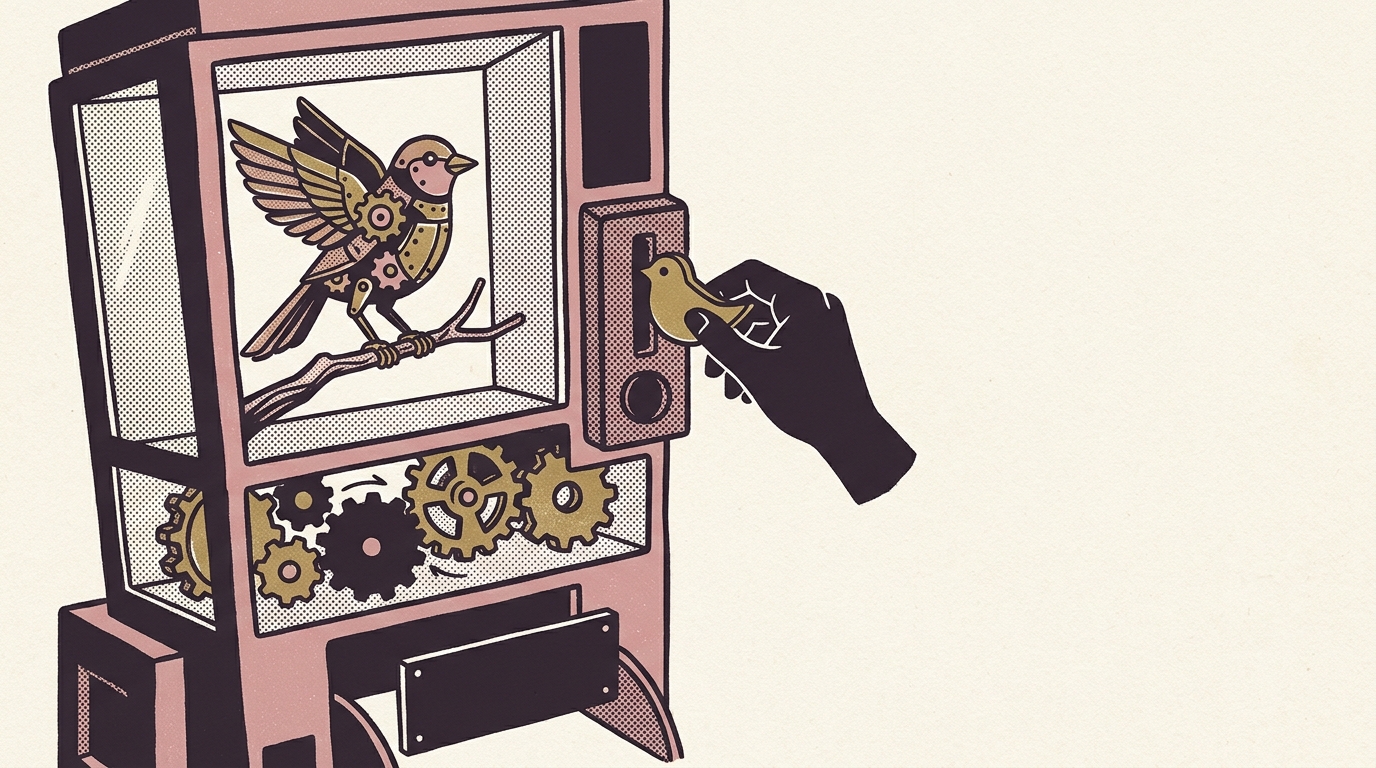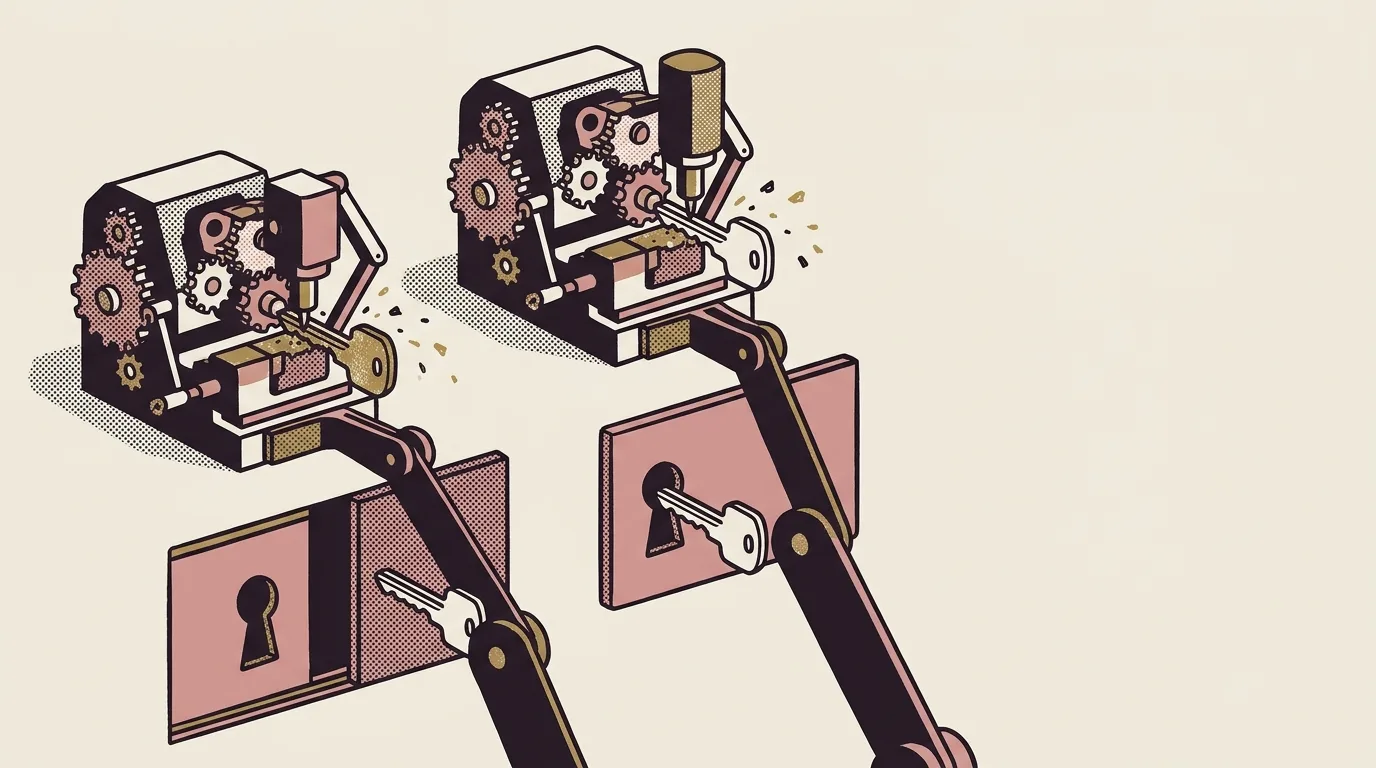
The NAPA SEASON album page had a line in the body prose: “Suno for the production and vocals.”
That sentence is wrong. Not ambiguous. Not misleadingly framed. Wrong. The lyrics on NAPA SEASON are written here. The production decisions are made here. Melodies are built in Logic Pro. Suno renders the vocals and instruments from those decisions. It is a tool in the chain, not a co-author. The published sentence gave it authorship.
That is a different category of bug from a broken link.
A broken link is a routing failure: the user wants to go somewhere and can’t. Fix it with a URL change, verify in a browser. A wrong credit is a semantic failure. The reader forms a model of who made the work, and that model is wrong. The fix requires knowing what you actually want the reader to believe, then writing a sentence that delivers it rather than one that sounds close enough.
Copy is a load-bearing surface. The wrong sentence on /creative gives away the authorship of the record. The wrong sentence on /contact reads as rejection before the prospect has said anything.
/creative: the sentence that hands authorship to a tool
The NAPA SEASON blurb fix was a two-step operation.
First, rewrite the prose to reflect the actual process. The new blurb attributes lyrics and production decisions to the work done here; it positions Suno as the rendering layer for vocals and instruments. The credit follows the authorship, not the tool that executes a step.
Second, rename the sub-brand. The content series had been labelled “Creative AI Series” across seven public surfaces: single and album pages, the footer, the series index, the video descriptions, the SingleRelease component. The label says “AI made this.” The correct label is “Creative AI Assisted Series.” One word added. “Assisted” relocates AI from author to instrument.
Seven surfaces required the change. The SingleRelease component. The album and single page templates. The footer. The series and video index descriptions. The word “Assisted” is now in the visible label, the meta description, the series JSON-LD, and the footer. Each surface carries the same claim. The edit is small per surface; the co-ordination is not.
Sub-brand labels are not cosmetic. They are architecture. Renaming one requires touching every surface that carries it, and if any surface is missed, the brand contract is split: two claims in public circulation, one accurate and one not.
The rename is a breaking change to the content label, not a spelling fix. It should be treated accordingly: traced, verified across all surfaces, logged.
/contact: copy that filters before the filter fires
The /contact page had a “Note on timelines.” The original read to the effect of: not taking on rushed work, two weeks minimum, probably not the right fit if that’s what you need.
That is accurate. It is pre-emptive rejection copy. The reader has not sent a message yet, and the sentence has already assessed them.
The intent was to signal quality: deliberate, planned work, not reactive scrambling. The framing positioned the constraint as a disqualifier. The prospect reads it and decides not to write before writing. The filter fires before the contact form does.
The fix inverted the frame. The timelines note now reads as a strength: considered timelines, not rushed output. The constraint is identical. The sentence is not.
This is the same class of problem as a conditional with the wrong operator. The old sentence passed a certain kind of prospect and rejected another. The new one passes a different set entirely. Changing the copy changes the function. The runtime difference is invisible in any log.
/learning: the label is the product description
The /learning hub h1 had been a catalogue label, something that named what the page contained. Phase 11.31c replaced it with “Engineering thinking.” and carried that framing into the sub-heading, the meta description, and the hub JSON-LD.
The old label described the contents. The new label describes the outcome. “Engineering thinking” is a claim: these resources teach how an engineer reasons, not only what an engineer knows. Someone searching for that framing finds it. Someone expecting a course catalogue still gets one, but with a positioned entry point that shapes what they expect before they read the first line.
The h1 does the same structural work as the sub-brand label. Both tell the reader what category they are in before they look at the content. Get the category wrong and the content is working against the label.
The detection problem
Code bugs have a runtime. A null pointer exception surfaces when the execution path hits it. A mismatched type is caught by the compiler. These have mechanisms: tests, linters, type-checkers. The detection happens before a user sees the result.
Copy bugs surface later, when a human reads the page and forms the wrong model. The detection mechanism is a re-read through the eyes of someone without context. Not a user test. Not a lint pass. A deliberate perspective shift.
The NAPA SEASON blurb existed for some period before the fix. Every reader in that window formed the wrong model of who made the record. There is no error log for that. There is no conversion rate annotated with “misattributed authorship.” The bug is invisible until someone reads it wrong and, if you’re fortunate, says something.
What changes the detection rate is reading copy as someone who doesn’t already know what you intended to write. “Suno for the production and vocals” is correct if you know the process. It is an authorship claim if you don’t. The sentence is the same either way.
What changes in practice
Three things, in decreasing order of subtlety.
Read for the model the reader forms, not the fact you intended to state. “Suno for the production and vocals” stated a fact. It formed a wrong model. These are different outputs from the same sentence. Test the model, not the fact.
Treat content labels as infrastructure. “Creative AI Series” existed across seven surfaces simultaneously. Renaming it required co-ordinated edits to components, templates, meta descriptions, and structured data. A label is not cosmetic. It is a contract distributed across every surface that carries it. Breaking the contract requires changing every instance.
Test constraints as strengths before publishing them as limits. The /contact timelines note was accurate. It was also rejection copy. Any sentence that names a constraint on what you won’t do should be tested against its inverse: can this constraint be expressed as what you do? If yes, that version is almost always the one to publish.
Out of scope
The broader question of how to attribute AI contribution in creative work is not settled. “Assisted” is the position taken here: AI as rendering instrument, human as author. Whether that framing holds as the tools change is a separate question, and one for a different sprint.
The fixes above are scoped to accuracy. The copy should describe the actual process, the actual constraint, the actual outcome. That is the bar. Whether the industry eventually arrives at a different convention for AI attribution is out of scope.
The devlog entries covering these changes are dated 2026-07-14, 2026-07-17, 2026-07-21, and 2026-07-25 at docs/devlog.md. The first track that landed on /creative, Tasogare, uploaded 2026-06-22, is also logged there: the moment the series went from placeholder to live.