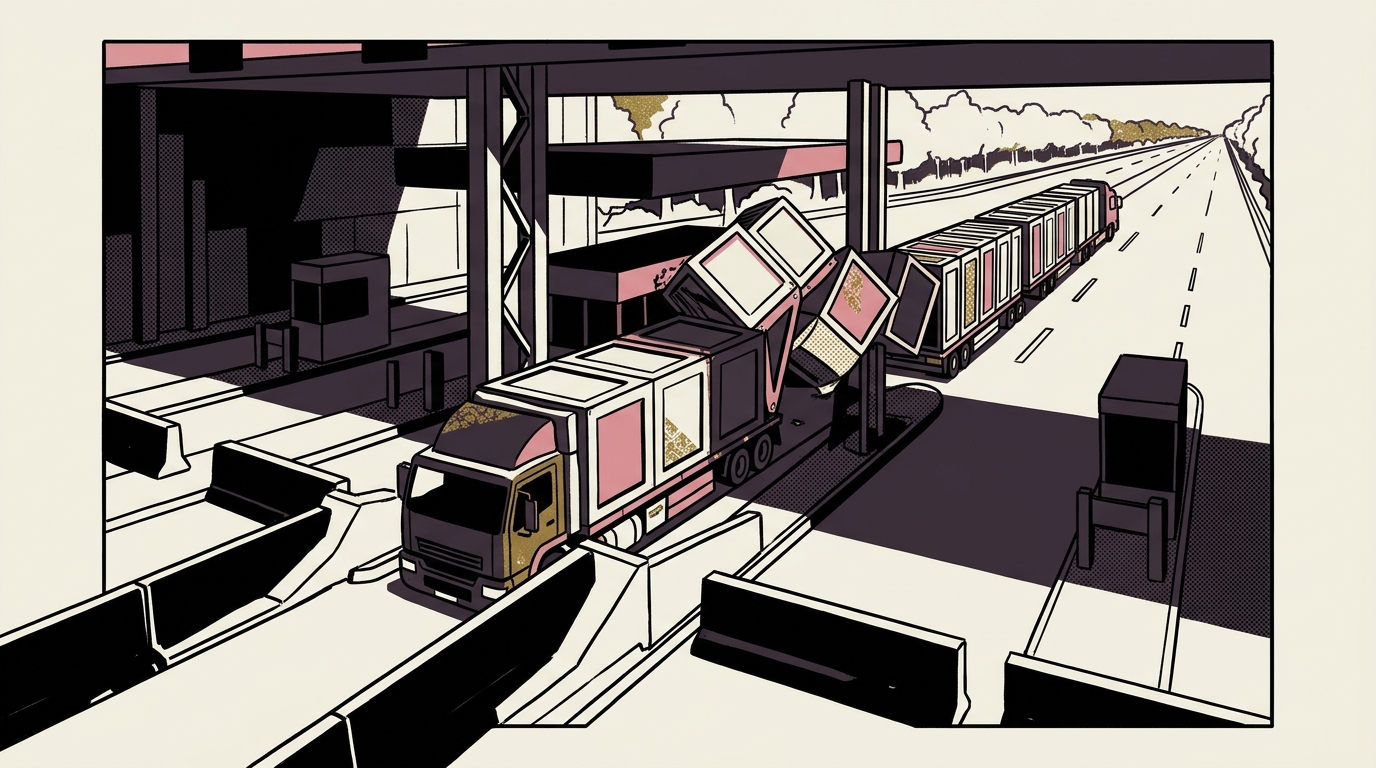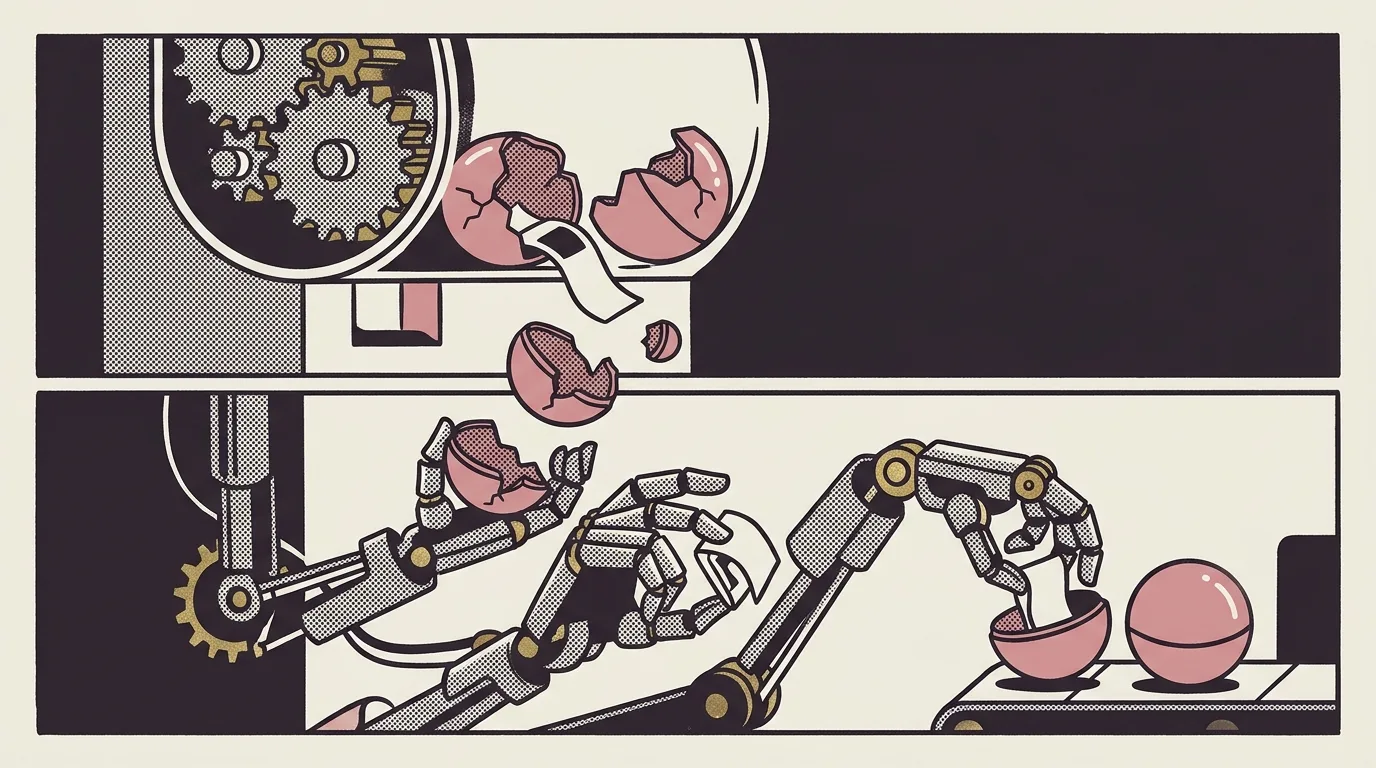
The cron's Day 2 draft came back with the slug mortgage-abandoned-about-above. That's what happens when the title-mangling step is mid-fix. The slug generator takes the first words of whatever title state exists at generation time. The draft also had 10 of 13 sentences passing claim verification. Three would have shipped with unverified claims.
Neither problem stopped the article from publishing. The slug got cleaned. The three sentences got corrected. The April mortgage rate-spike piece shipped alongside T-007 Marriage Allowance that same day. That's what distinguishes a corrective pass from a gate.
The fourteen-pillar streak was at Day 2. The pipeline was two days old. The sourcing layer was still calibrating; the cron was producing inconsistently; operator publishes were covering the gaps. One discard that early shapes the rest of the streak. Under a gate, the Day 2 mortgage draft is a discard. Under a corrective pass, it's a publish.
What title-mangling produces
The slug mortgage-abandoned-about-above is parseable. The draft's working title hadn't been cleaned yet. When the slug step ran, the generator took the first content words available from whatever the drafter had produced: mortgage, abandoned, about, above. Four words that bear no relationship to the published headline.
That's title-mangling: a slug generated from an intermediate state rather than the final title. The title-mangling fix was mid-flight on Day 2. The corrective pass existed, but the upstream clean step that should have fed it correct input hadn't shipped. The slug came out wrong because the input was wrong, not because the corrective step missed it. Once the corrective pass caught the artifact, the fix was a fifteen-second edit. Once a mangled URL is indexed, fixing it creates a redirect obligation.
The corrective pass catches it before the URL is finalised.
What the claim-block problem means
Day 2: 13 sentences in the mortgage draft. 10 verified. 3 didn't.
A gate that rejects on any failure discards the draft. A gate that accepts a threshold (say, 10 of 13) ships three unverified claims. Neither is the right call for a pipeline building grounded content.
The corrective pass does neither. It identifies the three failing sentences and corrects each one: reground the claim, update the source citation, rewrite the sentence. Then re-verify. The draft ships when all 13 pass.
The difference shows in operator overhead. A gate that discards a 10-of-13 draft creates a gap the operator fills with a fresh draft from scratch. A corrective pass that fixes the three failures converts a 77% complete draft to 100%. Less total work. The streak doesn't gap.
Day 5 ran the same logic at higher volume. The ISA allowance pillar (isa-allowance-uk-explained, 754 words) had 15 hand-curated claim blocks drawn from three gov.uk pages. That's operator-mode correction: slower, more precise, same shape. Identify the blocks, verify each, correct any that fail, ship when all pass.
15 blocks at Day 5, 3 corrections at Day 2. Different counts. Same shape.
What the cron was actually doing across Days 2–6
Day 2: one draft, slug unusable, three claim blocks failing, corrected and shipped alongside Marriage Allowance.
Day 3: cron produced one draft on the same mortgage cluster again. Same BBC, Zoopla, Moneyfacts, BoE ground, US-Iran framing, £232/£66 regional figures as the Day 2 publish. Already shipped the day before. The cron had no awareness of what it had drafted; it re-ranked and re-generated the top cluster. The corrective decision on Day 3 was to not ship that draft; the operator published Personal Savings Allowance and HICBC instead.
Day 4: zero drafts. 150 clusters ranked; mortgage scored 20 at the top, but the sourcing layer hadn't updated. Same ground, nothing new to verify. CGT annual exemption and Dividend Allowance published by operator, completing the tax-free-allowances trilogy with the Day 3 PSA.
Day 5: ISA allowance and student loan repayment thresholds, both drafted overnight and published before the cron fired. 754 words, 15 hand-curated blocks for the ISA piece alone.
Day 6: Monday. The AppleEvent -1712 resource lock from the morning kick cleared, and the 08:35 cycle completed. First live gov.uk Search API cron poll. UK House Price Index April 2026 and Pension Annual Allowance shipped.
The cron covered Days 2 and 6 with publishable drafts across those five days. Operator publishes covered the rest. The corrective pass applied to both paths.
The gap a gate doesn't close
There's a simpler pipeline: run the verifier, pass or fail, done. Failing drafts get discarded; the cron tries again the next morning. Every published article passes cleanly. No corrective work required.
The problem is cadence. Discarded drafts are invisible in the published count. A fourteen-day streak has no margin for gaps, especially not in the first three days when the cron's sourcing layer is still calibrating. The Day 2 mortgage draft under a gate architecture is a discard, which means Day 2 has one publish instead of two, or the operator covers it manually anyway. The corrective work doesn't go away. It just moves somewhere less visible.
Out of scope: fully automated correction without human review. Every corrective pass in the first six days had a human in the loop, either doing the correction directly (operator-mode Days 3–5) or reviewing before shipping (Day 2 rescue). Automating the correction step itself is a different sprint.
What held
Fourteen pillars. The corrective pass on every one of them: claim blocks verified, slugs checked, titles matched against final URLs.
Day 2 showed what title-mangling produces unchecked. A slug that can't ship as-is. Day 3 applied the corrective pass at the decision level: don't ship a draft that duplicates what's already live, ship something new instead. Day 5 showed the same logic at scale: 15 blocks, three gov.uk pages, 754 words. Day 6 showed the sourcing layer catching up. The first gov.uk Search API cron poll produced ground the pipeline could actually use.
The cron improving over six days is one variable. The corrective pass being in place before the cron improved is the other. Without it, Day 2 either discards or ships wrong. The streak's shape changes either way.
The gate is the minimum. The corrective pass is what made fourteen consecutive pillars defensible.