Posts on Swift.
12 posts tagged "Swift".

Four quest types. None of them read your transactions.
An iOS budget app shipped a gamification layer backed by a hardcoded mock array. Phase C replaced it with QuestGenerator — a pure function that derives up to four quests per day from real transaction history. What changed wasn’t the number of quests. It was whether the quests knew anything about the user.

accessibilityReduceMotion should be a contract. Phase D made it one.
Phase D of an iOS budget app Cursed Energy feature adds five animated layers across sigil, energy, claim, level-up, and streak milestone surfaces. Every one checks accessibilityReduceMotion before firing — a hard gate, not a hint. The uniformity was a rule established on the first addition and held through to the fifth.

Five sprints inside one PR: what an iOS budget app's side-branch pattern reveals about tracking
PR #10 on an iOS budget app landed five complete features in a single merge. Each devlog entry reads as a self-contained sprint brief with its own type, its own boundary, its own completion signal. PR-level granularity and feature-level granularity are not the same number.
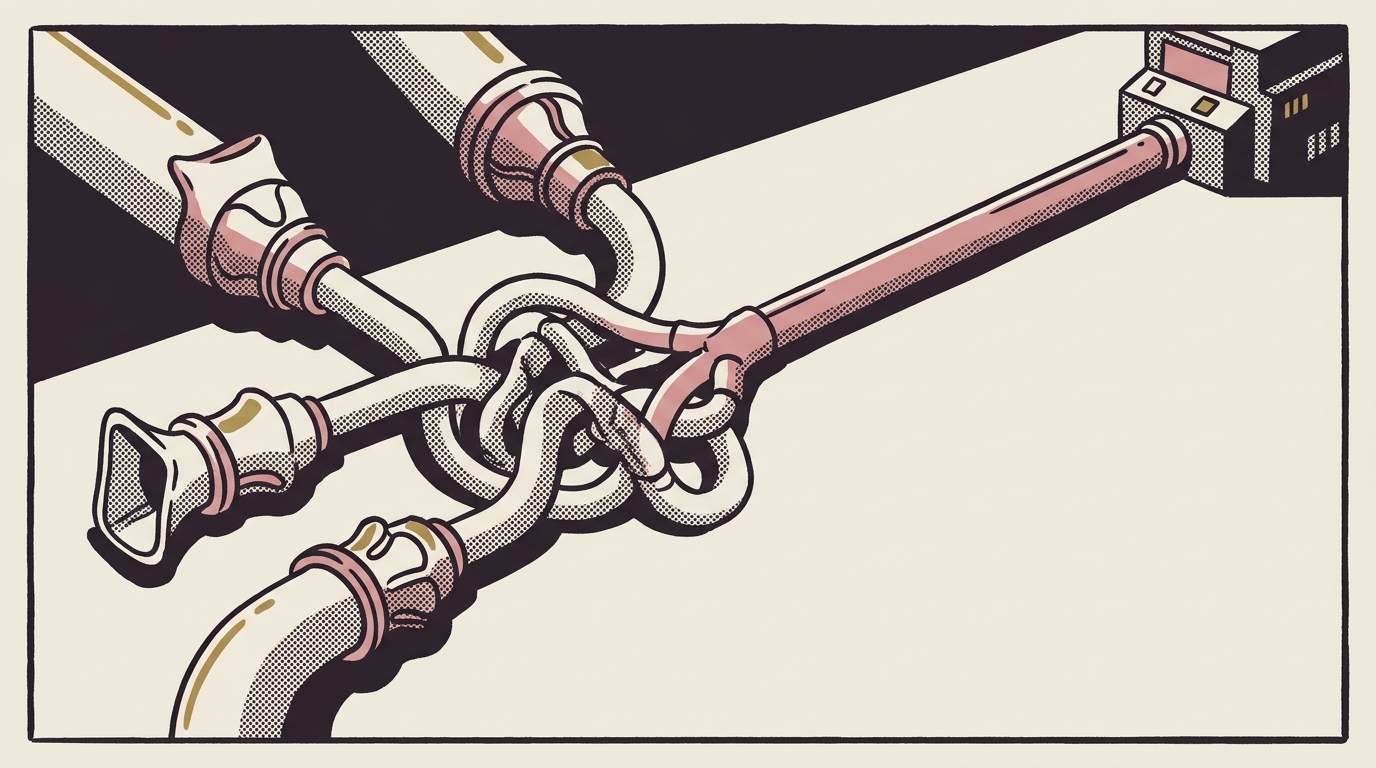
The dedup layer had three hash schemes. CDImportSource replaced them — and four banks validated with zero per-bank code.
The an iOS budget app import layer had three coexisting hash schemes with no shared contract between them. Collapsing them into CDImportSource — a unified source-attribution model — was the structural prerequisite for universal CSV and PDF parsers that validated across Monzo, Halifax, Revolut, and HSBC.

Cursed Energy Phase C: wiring an iOS budget app's quest system to real transaction history
The an iOS budget app gamification layer had quest cards, a claim button, and a streak counter. None of it read from actual spending. Replacing a hardcoded array with a transaction-aware QuestGenerator turned decorative chrome into a feedback loop that surfaces real patterns.