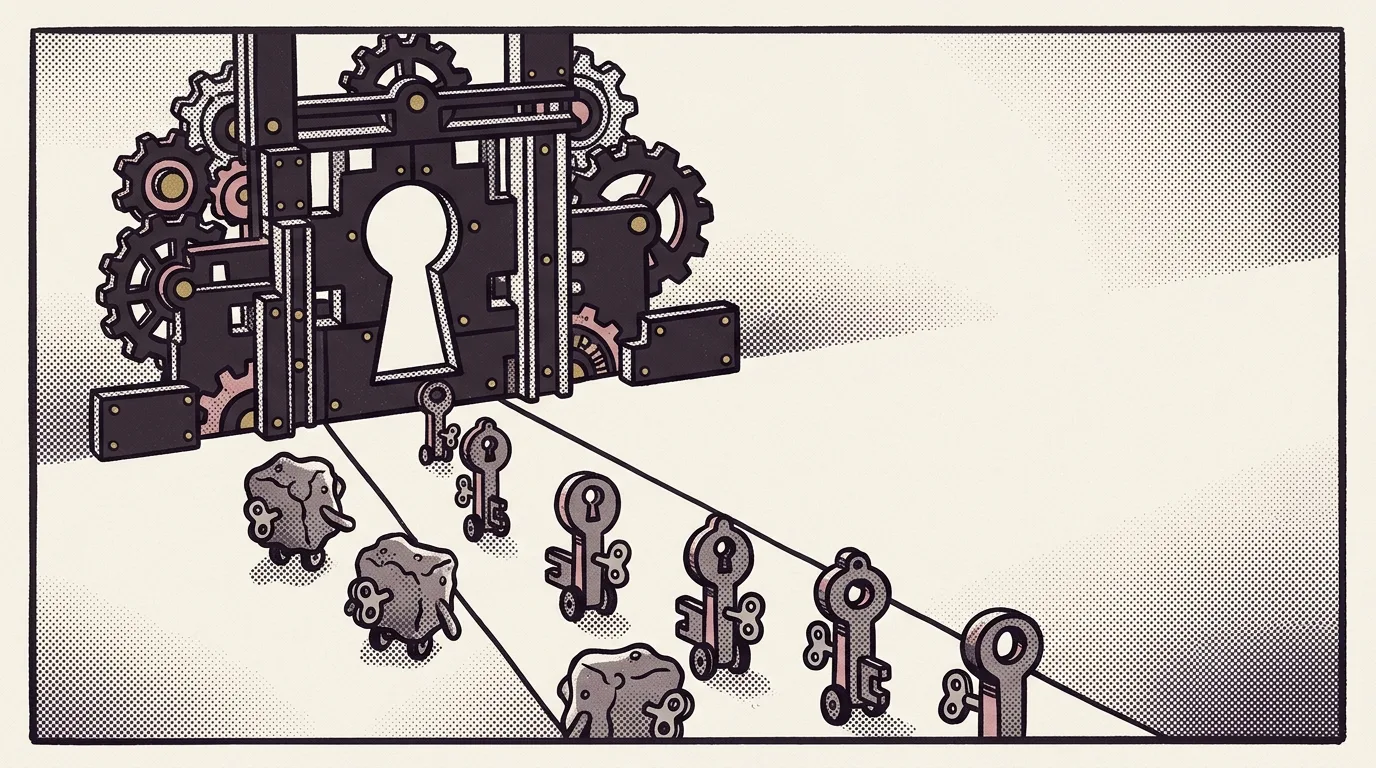
The note on the /contact/ page was written to do one thing: filter out the wrong enquiries before they became conversations.
The old version said that rushed work wasn’t something I take on, that two weeks was a floor, and that if a prospect needed someone faster, I was probably not the right person.
I thought I was setting expectations. I was rejecting the right prospects.
What the copy was supposed to do
The logic behind the note was straightforward. A prospect who reads that two weeks is a floor and still sends a message is signalling something: they have a realistic timeline, they’ve thought about it, they’re not going to come back on Thursday and ask if we can launch by Friday. The copy was meant to work as a gate. Anyone who got through it would already be qualified on the timeline question.
That logic works if the reader is confident they fit. It doesn’t work if they arrive with any uncertainty about whether they’re the right kind of client.
The failure mode
“Probably not the right person” is a verdict, not a gate condition.
A gate condition is: “if you need delivery in under two weeks, this isn’t a fit.” That’s testable. A prospect reads it, checks their timeline, passes through or doesn’t.
A verdict reads as personal. A prospect with a two-month runway and a well-formed brief reads “probably not the right person” and hears something broader than the timeline question. If they’re carrying any ambient doubt about scope, or about whether a developer would take them seriously, the phrase lands in that gap and confirms it. They don’t send the message.
The copy was built to catch the wrong enquiries. It was catching the right ones too.
Author’s frame, reader’s frame
The copy didn’t look broken. It accurately described the actual policy. The grammar was fine, the logic was internally consistent, the tone wasn’t hostile. The failure was invisible from the author’s position and only surfaces when you switch frames deliberately.
When I wrote the note, I was thinking about the enquiries I didn’t want: the “can we launch before the weekend” requests, the briefs that arrived with three days’ runway, the projects where the timeline was already broken before I got involved. “Probably not the right person” was aimed at those. From my frame, it was a narrow gate.
From a prospect’s frame, the phrase sits inside their own uncertainty, not mine. Most first-time enquiries carry ambiguity about fit. A sentence saying “probably not the right person” slots straight into that ambiguity and confirms the doubt. The filter was miscalibrated.
The flip
The fix on 25 July didn’t change the policy. Two weeks is still the floor and I still don’t take on rushed work. What changed was the frame.
The new note positions the timeline reality as a process description rather than a rejection. I need lead time because the upfront work is where the value sits: discovery, scoping, decisions made before anything gets built. Cutting that short doesn’t just compress the timeline; it compresses the work.
A prospect reading that has something to orient against. They’re not reading a verdict about whether they qualify. They’re reading a description of a process that tells them something about what they’d get from it.
What changed is whose interests the sentence serves. The old copy was about what I don’t do; the new copy is about what the timeline enables.
Same pattern, different surface
The month produced other copy changes that followed the same shape.
The /learning/ hub headline was rewritten to “Engineering thinking.” The previous headline described the catalogue from the author’s frame: what the courses cover. The new one addresses the reader’s frame: what the courses develop. The meta description and hub JSON-LD description carried the same reframing through.
Not as sharp as the contact page version, but structurally identical. The author knows what the thing is. The reader needs to know what it does for them. The sentence that describes the author’s reality isn’t automatically the sentence that serves the reader’s decision.
What this isn’t
It isn’t an argument for softening gates or writing copy that flatters every reader into thinking they’re a fit. The contact page still has a timelines note. Some prospects will read the new version and correctly conclude the timeline doesn’t work for them, and that’s the intended outcome of the gate.
The distinction is between a gate that closes on poor-fit prospects and a gate that closes on poor-fit prospects and on good-fit prospects who happen to arrive with uncertainty. The first is filtration. The second is filtration plus unintentional rejection.
Both look identical in the copy. Only one of them is what you meant.
The test
One question, applicable to any copy written as a quality signal: read it as the right prospect in the wrong mood — someone who genuinely fits the criteria but is uncertain whether they do.
If that person reads the sentence and takes it as a reason not to reach out, the gate is miscalibrated. The copy isn’t doing what you think it is.
The failure mode has no obvious symptom. Prospects don’t bounce visibly; they just don’t send the message. You see the absence, not the exit. That’s why the fix has to start with a deliberate frame-switch, not with analytics. Read the page as if you wrote it for yourself, then read it again cold.
Those two reads will produce different sentences. The second one is the one that ships.